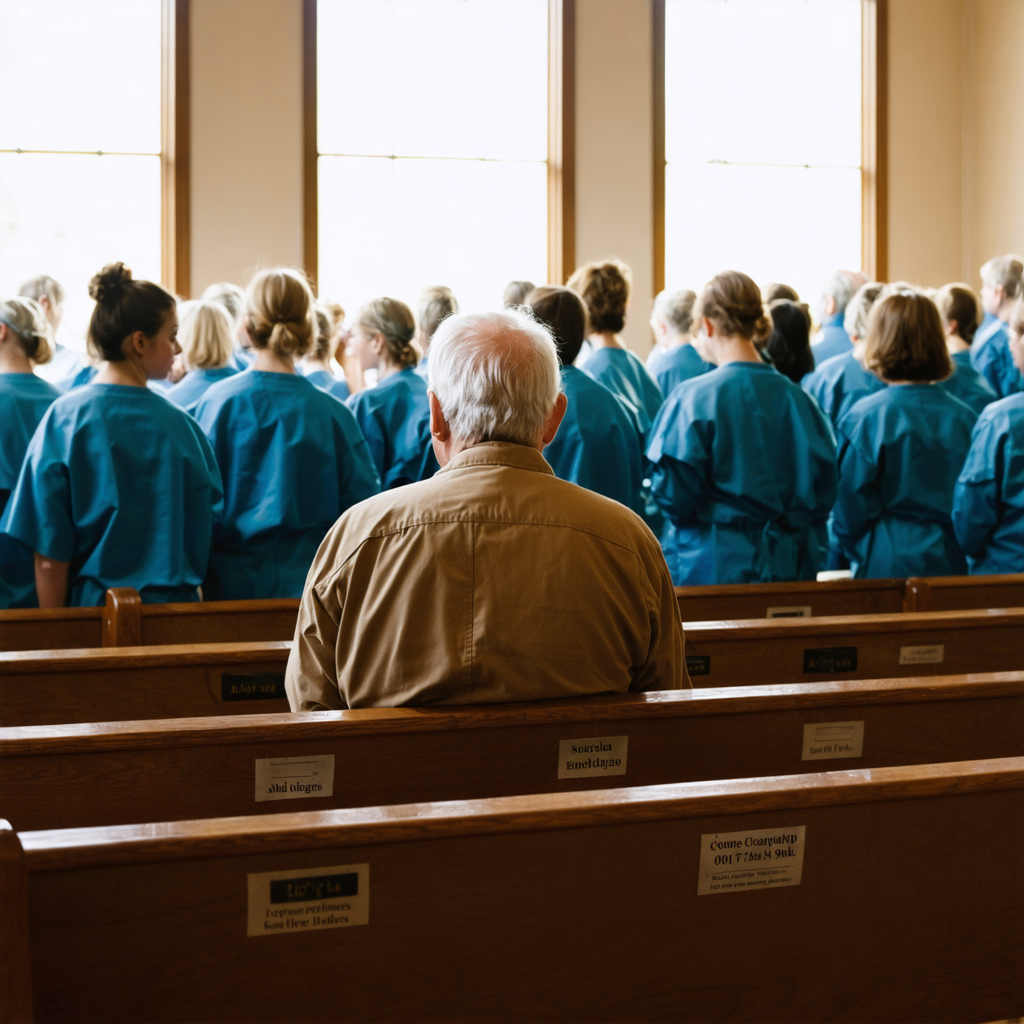
Martin Osei booked the smallest chapel the funeral home had. When they asked him twice if he was sure about the date — no reception, no catering, no guest list — he said yes. His father had lived in the same house for thirty-one years. He had not, as far as Martin knew, been a man who collected people.
Emmanuel Osei had come from Ghana in 1987, worked four decades in a textile warehouse, and retired quietly. He kept a garden, a shortwave radio, and his faith, more or less in that order. He had been, in the fullest sense of the word, content. Martin had always admired this about him without quite understanding it.
The service was set for eleven. Martin arrived early and sat in the car park for a while, watching the entrance, not yet ready to go in.
At ten fifty, a woman knocked on the chapel door. She was a nurse from the hospice ward where Emmanuel had spent his final three weeks. She said he had been kind to all of them, and that she had mentioned the funeral to a few colleagues. She hoped that was all right.
It was more than all right. By eleven, there were twenty-two people in a chapel that had been booked for none.
Martin did not know most of them. A man said Emmanuel had helped him carry groceries up four flights of stairs one afternoon seven years ago, and that he had thought about it many times since. Two women had come from a church his father had stopped attending a decade earlier. A teenager sat alone in the back row and left without introducing herself.
The service was brief. There was one hymn. Afterwards, in the small side room where the funeral home had set out tea and biscuits, a hospice worker named Rosa told Martin that his father had asked about her children by name every single day, without fail.
Martin had not known his father asked about anyone’s children.
He drove to the airport that evening with the windows down, even though it was cold. He was trying to work out how a man could live quietly for thirty-one years and still leave a room full of people behind. He did not entirely solve it. But somewhere on the motorway, in the dark, he stopped feeling like his father had been alone.
By eleven, there were twenty-two people in the chapel.